The short answerThe Premier League table ranks its 20 clubs by points: three for a win, one for a draw, none for a defeat. Clubs level on points are separated by goal difference, then by goals scored. After 38 matches the top clubs qualify for Europe and the bottom three are relegated.
The Premier League table is one of the most-checked tables in sport, and most of it explains itself. The parts that catch people out are what happens when clubs finish level, and exactly what each position at the top and bottom is worth. This guide covers both.
Points: three for a win, one for a draw
Twenty clubs each play 38 matches, home and away against every other club. A win is worth three points, a draw one, and a defeat nothing. The table is ordered by total points.
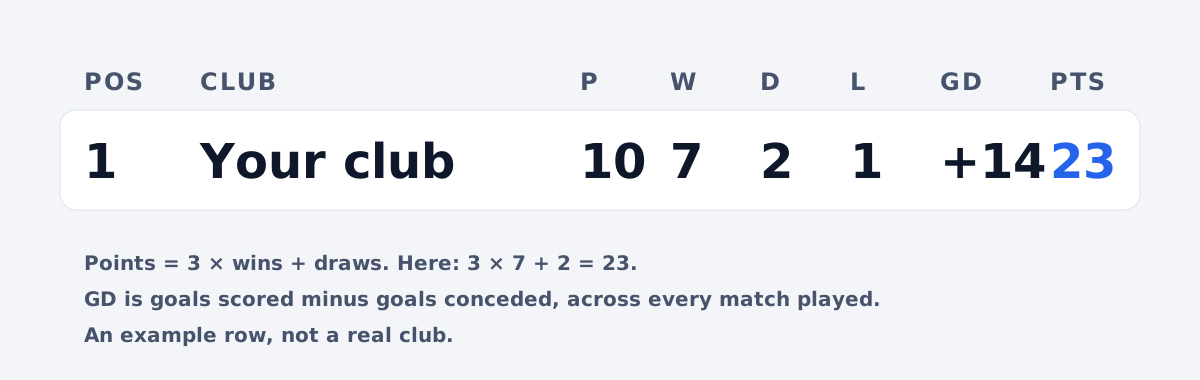
| Column | Means |
|---|---|
| P | Matches played |
| W / D / L | Won, drawn, lost |
| GD | Goal difference: goals scored minus goals conceded |
| Pts | Points: 3 × wins + draws |
When clubs are level on points
Clubs with the same number of points are separated in this order:
- Goal difference. A club that has scored 40 and conceded 26 (+14) ranks above one that has scored 35 and conceded 25 (+10).
- Goals scored. If goal difference is also level, the club that has scored more goals ranks higher.
If clubs are still level after both, the league applies the further criteria in its rules. Where a tie at the end of the season would decide the champions, relegation or qualification for another competition, and cannot be split any other way, the rules provide for a play-off match between the clubs involved.
Because goal difference comes before head-to-head, a heavy win against anyone is worth something in a tight race, and a heavy defeat costs something even in a match that seemed not to matter.
What each part of the table is worth
- 1st: the champions.
- The top places: qualification for the UEFA Champions League. That is usually the top four, and it can extend to fifth in a season when English clubs have done well enough in Europe to earn an extra place.
- The places below: qualification for the Europa League and the Conference League. The exact positions depend on who wins the domestic cups, because cup winners take some of those places.
- 18th, 19th and 20th: relegation to the Championship.
Reading the table early in the season
After a handful of matches the table mostly reflects the fixture list: a club that has played three of last season's top four will sit lower than its level. Two columns help look past that: P, because a club with a game in hand has points still to play for, and GD, which often says more about how a team is playing than its position does.
BuffScore's Tables tab shows the full Premier League table with P, W, D, L, GD and Pts. My teams puts your club's position next to its next match and last result.
Scores, tables and alerts in one app
BuffScore is free on Android. No odds, no betting.